

TL;DR
The Big Idea: The radical-transparency brand just sold to the radical-opacity brand. Read that line until it stops feeling weird.
From Last Week’s News - Amazon just made Gopuff's entire business model a $10 line item on a Prime member's checkout screen.
Weekly Lookahead - Home Depot, Lowe’s, Target, and Walmart all announce earnings this week. Every call will tell us more about the US consumer.
THE NEXT WATSON WEBINAR


TOP NEWS OF THE WEEK

Everlane's $100M Lesson: Mission Is Not Defensibility
Everlane just sold to Shein for $100M. Read that twice.
The brand that built its identity on radical transparency and ethical sourcing has been absorbed by the Chinese fast-fashion juggernaut that spent the last five years dodging questions about 75-hour workweeks and stealing designs from small businesses. Lauren Sherman at Puck broke it this weekend. L Catterton, the majority owner, signed off. Common shareholders get nothing.
Let's be honest about what actually happened here.
Everlane was a great pitch deck. Premium basics, factory-level cost transparency, Italian leather totes for half what Madewell charged. In 2014, that was a story. By 2020, it was a commodity. Uniqlo does basics better at scale. Amazon Essentials does them cheaper. Quince figured out the real hack: skip the founder mythology, ship the same Chinese factory output that Everlane was charging $98 for, price it at $39, and watch the LTV curve do the rest. Quince's growth over the last two years is the obituary for Everlane's premium positioning.
The cap table tells the story. About $90M in debt walking in the door. A $25M Gordon Brothers loan. A $65M asset-based revolver. When the bank line is bigger than the equity check anyone's willing to write, you're not running a brand anymore, you're managing an exit. L Catterton went hunting for a co-investor in March and came back with an acquirer instead. That's a downgrade.
What Is Shein Actually Buying?
Not technology. Not supply chain. Not customers, really. Everlane's email file has been shrinking for three years. What Shein gets is a U.S.-domiciled brand asset with millennial residual goodwill and a story that prints nicely on a hangtag. Take Shein's production engine, plug it into Everlane's storefront, charge a 40% premium over the Shein app for the same hoodie. That's the playbook. Quince proved it works.
The deeper lesson is one that founders never want to hear. Values are not a moat. Mission is not defensibility. You can publish your factory wage data on the PDP and still lose to the company that doesn't. Customers said they cared. Their carts said something else. Michael Preysman built a brand that flattered a specific Brooklyn-and-Mission-Bay sensibility for about seven years, and when that audience aged into Theory and Frankie Shop, the cupboard was empty. The product never caught on with the marketing. That gap is fatal in basics, because basics are a margin game, and margin requires either scale or actual differentiation. Everlane had neither by year ten.
Shein gets a logo and a customer list. L Catterton gets to mark something off the books. Preysman has been gone for five years and is reportedly fine. The common stockholders, including most of the early employees who took stock in lieu of salary, get a thank-you note.
The question for the next D2C founder pitching me a transparent anything: what's the moat in year eight?
The Watson Weekly eCommerce Digest
May 18th, 2026: Amazon Now Goes Live, eBay Says No to GameStop, and OpenAI Bets $14B on Enterprise
May 18, 2026
The Truth About Last Week: Amazon Now Isn't About 30 Minutes. It's About The $10 Gap.
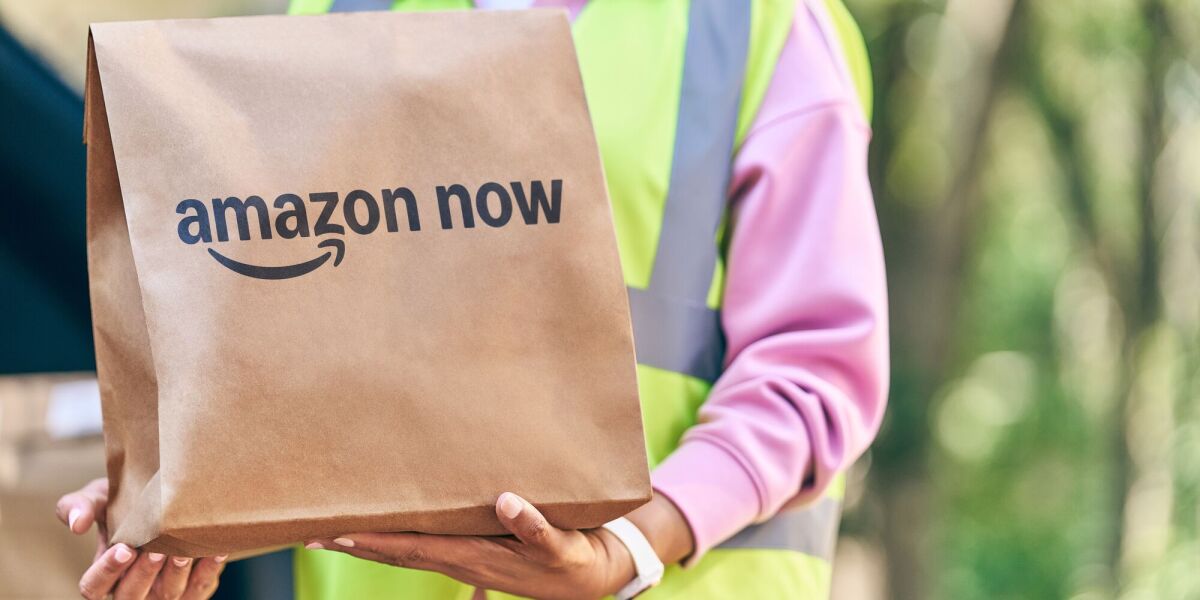
Amazon Now drops 30-minute delivery in Atlanta, Dallas–Fort Worth, Philadelphia, and Seattle, with seven more metros queued. Prime members pay $3.99 per order. Non-members pay $13.99. That ten-dollar gap is the whole story.
Who gets squeezed? Gopuff, obviously. Instacart's Priority tier. DoorDash's DashMart. Walmart Express has the store footprint, but not the assortment depth that Amazon is loading behind these smaller fulfillment nodes. AirPods next to avocados is a SKU mix none of the rapid-commerce specialists can match without rebuilding their networks from scratch. The 7-Eleven run for a forgotten carton of eggs? Amazon wants that trip too.
Prime member math is straightforward. You're already paying $139 a year. Now the impulse moments, AirPods before a flight, laundry detergent at 9 pm, fold into the same wallet. $3.99 beats most DoorDash convenience runs on price and most Instacart windows on speed. The catch is the $1.99 small-order fee under $15, which is how Amazon nudges basket size up toward grocery-trip economics.
Why It Matters
Forget the 30-minute number. The harder question: do Gopuff and Instacart have a structural answer when Prime is the bundled default? I don't think they do. Convenience plus a sunk-cost membership is a moat their pricing can't dig under.
WEEKLY LOOKAHEAD
WHAT WE’RE WATCHING THIS WEEK
Tuesday, May 19
Home Depot (Before Open) - Can professional contractors' demand offset a continued slowdown in large, DIY consumer home renovation projects?
Lowe’s (Before Open) - Is the specialized DIY customer base pulling back on discretionary spending more sharply than Home Depot's pro-heavy mix?
Wednesday, May 20
Target (Before Open) - Will recent price cuts and focus on digital delivery have been enough to revive slumping sales in higher-margin discretionary categories like apparel and home decor?
Thursday, May 21
Walmart (Before Open) - Compare the growth rate of their e-commerce marketplace and high-margin advertising business to see if Walmart is successfully diversifying profits beyond grocery market-share dominance.
Watson Events & Webinars
The Big Green Bag of Promise: Enterprise Shopify Webinar: Episode 1, will take place on June 4 at 12:30 PM ET. Register here
Missed any of the Watson Webinars? From recaps to earnings and more - Watch the webinars
Highlights and sizzle from our latest Watson Live! Agentic Debate at Shoptalk, presented by Logicbroker. What did you miss?
