

TL;DR
What Lowe's Learned Before the Rest of Retail. Every retail executive I speak to can list their AI pilots. Almost none can tell me what they cancelled this year. Chandhu Nair can.
Agentic Corner: The AI and LLM news you need to know, not the slop.
Investor News Roundup: Utz taken private, Sable raises funding, and more.

THE INTERVIEW TAKEAWAY
Nobody Can Tell Me What They Cancelled
I talked with Chandhu Nair, Senior Vice President - Stores, Data, AI & Innovation at Lowe's. Three things stayed with me.
The first is that the best product decision came from outside the product team. Milo Companion started as a way to ask the store scorecard a question and get numbers back. That version would have helped department supervisors and store managers, and stopped there. Then Chandhu walked stores with his peer in store operations, who told him the real prize was answering every question about every product the store carries. Do that and it reaches all 300,000 associates.
What happened next is the part worth copying. Chandhu said yes, then said the thing would launch around 60 percent accurate, and asked for five stores to learn in. He got two. Lowe's says the platform has since handled about five million questions and that store LTR scores have improved, though the company hasn't published the math separating the tool's effect from everything else moving in those stores. The decision structure holds regardless. Two stores running something rough taught them more than a longer build cycle would have.
The second thing is that voice was never on the roadmap. The floor put it there. The app runs on the Zebra devices associates already carry, and Lowe's had a list of features it believed mattered. Then the team watched people use it and found, by Chandhu's account, that roughly 60 percent of interactions came through voice, because nobody wants to look down and type while a customer stands in front of them. The roadmap changed to two-way voice. Image input followed, after customers kept arriving with a paint can sprayed over so thoroughly there was no product name left to read. Spanish came after that, since many associates and customers speak it.
I compared this on air to eCommerce moving from desktop to mobile. I undersold it. Mobile changed which screen the work happened on. Voice raises the question of whether a screen belongs in that moment at all.
The third thing is the one I keep circling back to. The framework earns its keep by what it kills. Six lighthouse areas, twenty crown jewel use cases, selected against four dimensions. Return on investment and technology readiness are the two everybody uses. The other two are change readiness and brand risk, and that is where most companies are thin. Chandhu puts the effort at roughly 30 percent technology and 70 percent bringing people along, so he scores the human half before funding rather than after. Leading indicators, built with the finance team, track adoption and Net Promoter Score. If those refuse to move, the project does not get to sit and wait for lagging numbers to rescue it. He says Lowe's has stopped work, redirected work, and used the freed capacity to start other things.
That last piece is what I would press other executives on. Everyone I speak to has a basket of AI pilots. Almost nobody can tell me what they cancelled this year.
THE BIG IDEA
Whether the discipline survives what Lowe's is becoming is a separate question. Foundation Building Materials and Artisan Design Group bring their own catalogs, their own supply chains, and a distributor model aimed at large pros. Chandhu described agents that source across all three catalogs so an outside sales rep doesn't have to.
Answering a rough plumbing question on aisle nine is a smaller problem than that, and the change management load now sits partly with people who arrived at Lowe's through an acquisition rather than through shop, sell, work.
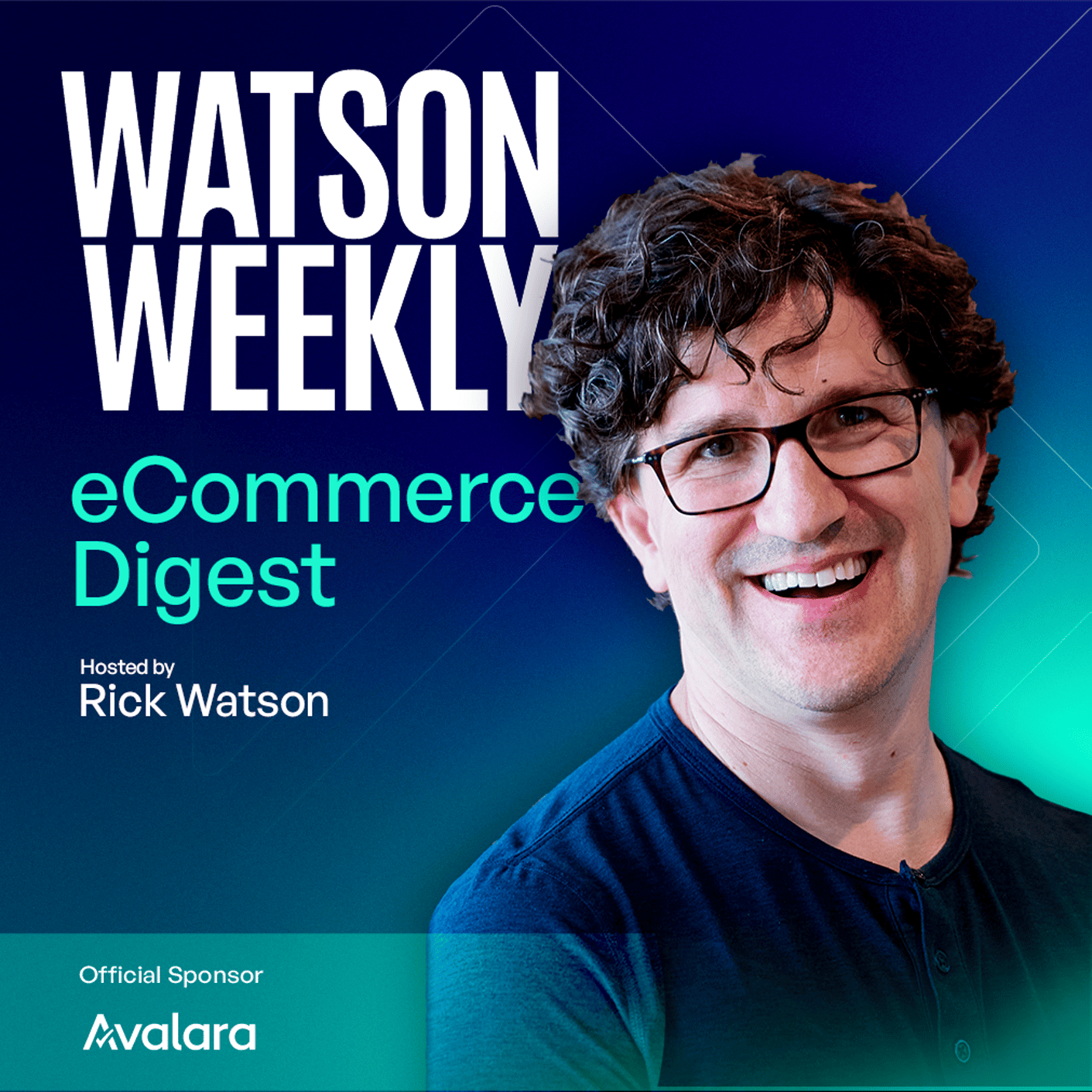
Listen To The Watson Weekly Interview
Inside Lowe's AI Portfolio: Shop, Sell, Work
July 22, 2026
Sponsor The Watson Weekly

The Agentic Corner
Reuters: Apple is looking for chip acquisitions. Chips and GPUs are the new goldrush.
TechCrunch: Gritt, a robotics startup that builds solar plants, emerged out of stealth, announced $26M in Series A funding. Robots building things, what could go wrong?
LinkedIn: Sable, a startup that creates AI agents for customer calls, emerged from stealth and announced $45M in funding. The end of call centers?
The Guardian: Amazon had a global pricing issue with AWS and sent very large accounts to customers. Blame AI right?
Investor News Roundup
Retail Dive: Sleep Country has acquired bankrupt mattress retailer Sleep Number for $702M ($530M in cash). Remember all those mattress startups? Not even a Kelce could save the business.
Reuters: Snack maker, Utz Brands will be taken private by Intersnack Group in a deal valuing the company at about $2.9B. Intersnack gets access to the US market. 2026: the year in which snacks consolidated.
Watson In The Wild
Rick Watson appeared on a ShipStation webinar: How Intelligent is your eCommerce delivery?
Missed any of the Watson Webinars? From recaps to earnings and more - Watch the webinars.
